DCI-Compliant Dental Records & Digital Patient Consent in India: Complete Clinic Guide
Learn how Indian dental clinics maintain DCI-aligned clinical records, FDI tooth charting, e-prescriptions, and time-stamped digital patient consents in under 15 seconds per patient.
Why Clinical Documentation & Consent Decide Clinic Safety
Every dental clinic in India balances high daily patient volume with strict ethical and medico-legal obligations under Dental Council of India (DCI) standards. Incomplete clinical notes, illegible handwritten prescriptions, or missing paper consent sheets don’t just cause operational confusion—they leave practitioners vulnerable during clinical audits, insurance claims, or patient disputes.
Digital dental records eliminate that exposure—provided your workflow captures the right clinical details effortlessly between patients.
5 Essential Elements of DCI-Aligned Dental Records
A complete, defensible dental record in an Indian clinic should consistently document:
- Structured Chief Complaint & Clinical Examination: Clear chronology of symptoms, medical/allergy alerts, and intraoral examination findings.
- Standardized FDI Tooth Notation: Unambiguous tooth-level charting (
11–48for permanent dentition,51–85for deciduous dentition) so associate dentists and specialists read every note consistently. - Staged Diagnosis & Treatment Plan with Cost Estimates: Documented clinical rationale, alternative options discussed, and transparent INR fee breakdowns before treatment begins.
- Attributable Electronic Prescriptions: Clear drug names, dosage frequencies, durations, and dentist authorization without handwriting ambiguity.
- Time-Stamped Informed Patient Consent: Verifiable proof that risks, benefits, and treatment steps were reviewed and approved by the patient prior to invasive procedures.
Why Paper Consent Forms Fail Busy Clinics
Traditional printed consent registers create three recurring points of failure:
- Lost or Unfiled Sheets: Paper slips signed at reception get separated from follow-up files during multi-visit root canals, orthodontic treatments, or implant surgeries.
- Generic One-Line Approvals: Handwritten signatures on blank slips rarely prove which specific procedure the patient authorized.
- No Time-Stamped Audit Trail: Physical paper lacks tamper-evident timestamps tying the signature directly to the finalized treatment plan.
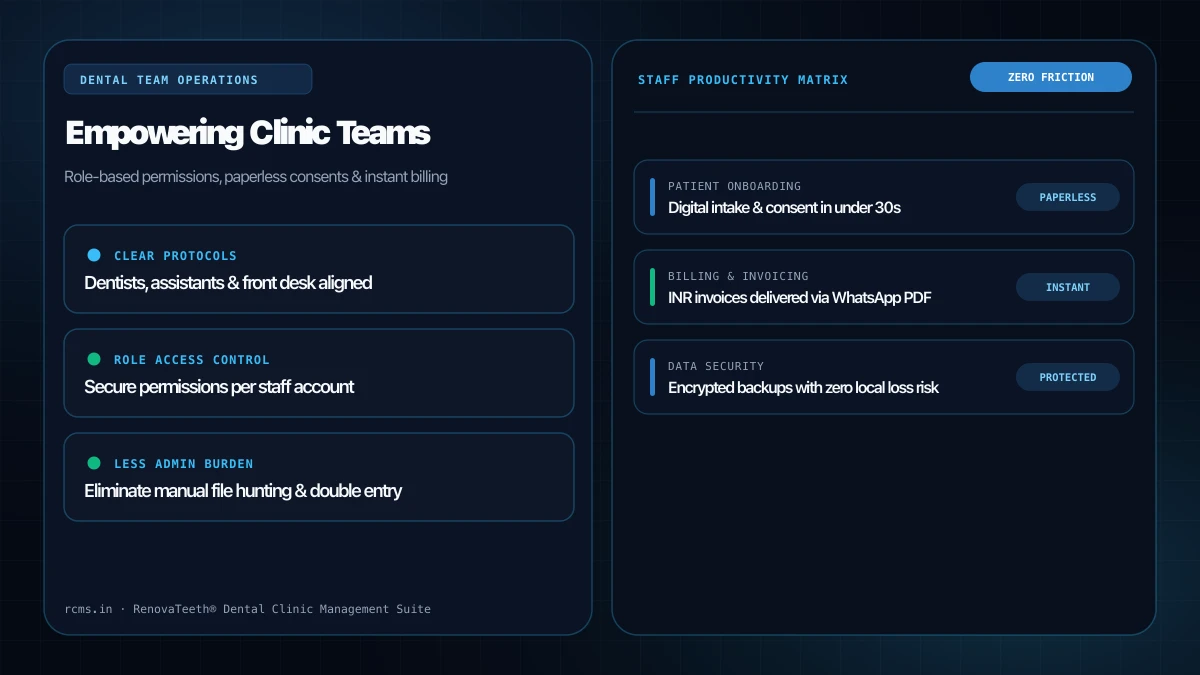
With RCMS® On-Device Patient Consent, patients review procedure-specific consent forms directly on your clinic’s tablet or smartphone and provide a digital signature on screen. Patients can approve multiple treatments in a single session, and every signed form receives a time-stamped compliance audit trail linked permanently to their treatment plan.
Eliminating Paper Prescription & Charting Errors
Studies across Indian healthcare practices highlight high error rates in handwritten paper prescriptions and unrecorded follow-up plans. Modern clinics solve both problems without adding admin staff:
- Preloaded Indian Medication Database: Inside RCMS® Electronic Prescriptions, dentists select preloaded Indian drugs and customizable templates with digital signature integration and share clear digital prescriptions directly to the patient’s WhatsApp in one tap.
- 15-Second Voice Documentation: Rather than spending 3 minutes typing after every visit, RCMS® Voice-to-Dental Record lets dentists dictate complaints, FDI tooth numbers (
e.g., tooth 36), examinations, and prescriptions directly in Indian accents—producing structured, DCI-aligned records in ~15 seconds per patient.
Indian Data Sovereignty & Privacy Safeguards
Digitizing patient records requires robust security and strict local data stewardship. Under RCMS® Data Security:
- Secure Cloud Hosting: Patient clinical notes, consents, and financial ledgers are hosted on secure servers for low-latency clinic access and alignment with healthcare data privacy expectations.
- End-to-End Encryption & Role Permissions: Sensitive patient records and clinic billing are encrypted and gated by granular staff roles so receptionists and associate dentists see only what they need.
- Always-On Automated Backups & No Data Selling: Continuous real-time backups protect against device loss or hardware failure, backed by RenovaTeeth®‘s strict policy of never selling clinic or patient data.
Upgrade Your Clinic Documentation Workflow
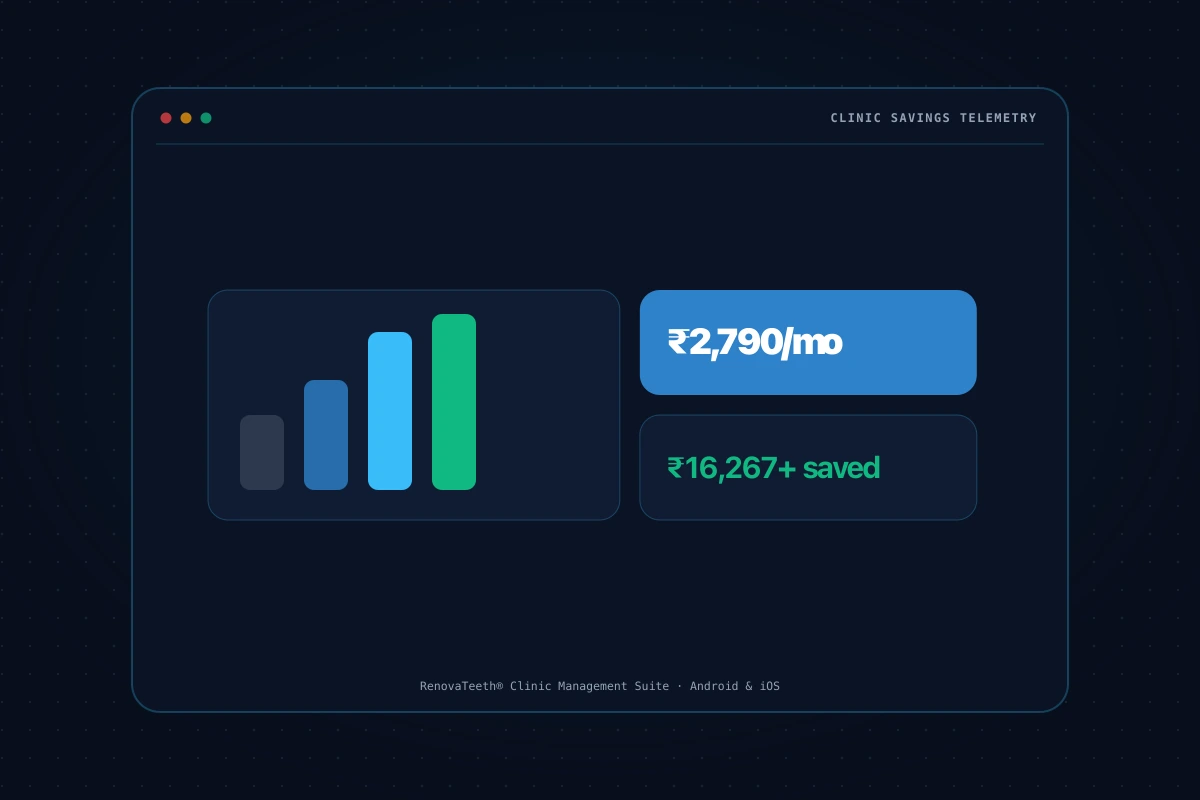
Moving from scattered paper files to compliant, voice-powered digital records doesn’t require buying desktop computers or hiring extra receptionists. Explore how RCMS® digitizes Indian dental clinics, estimate your time and cost savings with our ROI Savings Calculator, or book a free 30-minute live demo to walk through digital consents, e-prescriptions, and Voice-to-Dental Record live.