· dental-software · 5 min read
The Future of Voice-to-Record Dental Documentation in India
Voice-powered RCMS® for Indian dental clinics: Convert spoken notes to structured records, generate e-prescriptions & automate WhatsApp follow-ups.

In the fast-paced world of modern dentistry in India, where clinics often handle high patient volumes with limited staff, clinical documentation remains one of the biggest bottlenecks. Picture this: A busy dentist in Mumbai or Bangalore wraps up a detailed consultation—discussing complaints, examining teeth, planning treatments, and prescribing medications—only to spend the next 20-30 minutes typing notes, updating records, and preparing prescriptions. This administrative overload not only eats into valuable chair time but also contributes to burnout and errors in record-keeping.
But what if that entire consultation could be captured effortlessly and transformed automatically into structured, accurate clinical notes, electronic prescriptions, treatment plans, and even automated follow-ups? Welcome to the era of voice-enabled dental clinic management software in India, where unstructured audio from patient interactions becomes actionable data in seconds. This isn’t science fiction—it’s the evolving reality that’s reshaping dental workflows and setting the stage for the future of paperless dental clinics in India.
The Current Challenges in Dental Clinical Documentation
Indian dentists face unique hurdles in managing clinical records. With rising patient expectations, regulatory requirements for maintaining detailed histories, and the push towards digital records under initiatives like Ayushman Bharat Digital Mission, accurate documentation is non-negotiable. Yet, traditional methods rely heavily on manual entry:
- Time Drain: Dentists often spend hours post-clinic typing notes, leading to delayed records and reduced patient throughput.
- Error-Prone Processes: Handwritten or hastily typed notes can lead to inaccuracies in treatment history, prescriptions, or consent forms.
- No-Show and Follow-Up Issues: Without seamless integration, reminders for follow-ups or reviews are manual, contributing to higher no-shows (often 20-30% in urban clinics).
- Administrative Costs: Hiring staff solely for transcription or data entry adds significant overhead. (Calculate your potential savings with our Clinic Savings Calculator).
These pain points are amplified in solo practices or multi-chair clinics common across India, where dentists juggle clinical excellence with operational efficiency.
How Voice Recognition Transforms Unstructured Audio into Structured Data
At the heart of this transformation is advanced speech recognition technology tailored for dentistry. Here’s a technical yet straightforward breakdown of the process:
1. Capture Phase
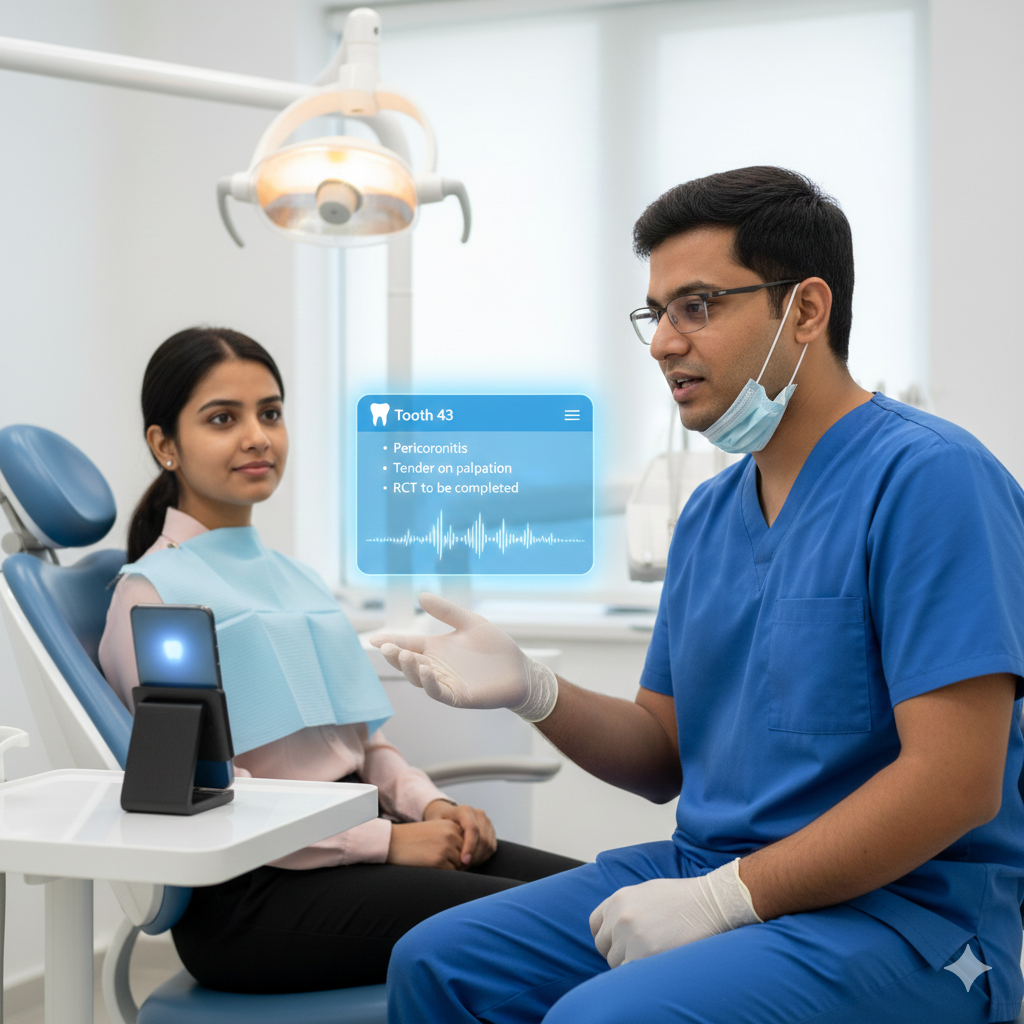
During the consultation, the dentist speaks naturally into a smartphone or tablet microphone—describing findings (“Tooth 36 has mesial caries”), patient complaints, diagnosis, treatment options, and prescriptions.
2. Speech-to-Text Conversion
Robust voice recognition engines (trained on dental terminology, accents common in India, and clinical jargon) transcribe the audio in real-time or near-real-time.
3. Structuring the Data
This is where the magic happens. Intelligent algorithms parse the transcribed text and map it to predefined structured fields:
- Chief complaints and history → Patient record sections
- Clinical findings → Dental charting (e.g., updating tooth-specific notes)
- Diagnosis and plan → Treatment planning module
- Medications → Electronic prescriptions (e-prescriptions compliant with Indian regulations)
- Consents and instructions → On-device patient consent and follow-up notes
4. Automation and Integration
The structured data instantly populates the patient’s digital record. From there:
- Automated reminders (via WhatsApp, SMS, or email) are triggered for follow-ups.
- Treatment plans are visualized for patient discussion.
- Backups ensure data security without paper files.
This voice-to-dental record system eliminates typing entirely, reducing documentation time by up to 90% while ensuring accuracy and completeness.
Real-World Benefits for Indian Dental Clinics
The shift from audio to action delivers tangible advantages:
- Time Savings: Dentists reclaim hours previously lost to paperwork, allowing more patients per day or better work-life balance.
- Cost Reduction: No need for dedicated transcription staff or expensive hardware—everything runs on existing smartphones. See our pricing plans to see how affordable this can be.
- Reduced No-Shows: Unlimited automated WhatsApp/SMS reminders keep patients engaged, cutting cancellations significantly.
- Paperless Operations: Digital consents, e-prescriptions, and records align with India’s growing digital health ecosystem.
- Improved Patient Care: Accurate, instant records mean better continuity—especially for ongoing treatments like orthodontics or implants.
Leading solutions like RCMS® demonstrate this in action. As India’s pioneering voice-enabled dental software, RCMS allows dentists to simply speak into their phone, instantly converting consultations into structured records, treatment plans, and prescriptions. Trusted by over 500 dentists, it has saved collectives thousands of hours and enabled truly mobile, efficient practices.
The Future: AI-Powered Evolution in Voice-Enabled Systems
Looking ahead, the future of clinical documentation in Indian dentistry is even more promising. Emerging trends include:
- Ambient Listening: AI that passively captures chairside conversations (with consent) and auto-generates notes—already seen in global tools and soon adapting to Indian contexts.
- Multilingual Support: Better handling of regional languages alongside English for diverse patient bases.
- Predictive Insights: Voice data integrated with AI for suggesting treatment options or flagging risks.
- Seamless Integration: With teledentistry, imaging, and national health portals.
As the best dental practice management software in India evolves, voice technology will become standard, driving efficiency in a market projected to grow rapidly with digital adoption.
Embracing the Change: Steps for Your Clinic
Transitioning to voice-enabled documentation is simpler than you think:
- Start with a mobile-friendly system that requires no new hardware.
- Train briefly on speaking structured commands for best accuracy.
- Integrate reminders and digital tools for immediate impact.
The result? A more profitable, patient-focused practice.
In conclusion, the future of clinical documentation—from audio consultations to automated, structured actions—is here. By adopting voice-enabled dental software in India, dentists can reduce administrative burdens, minimize errors, and focus on what matters most: delivering exceptional care.
Explore how RCMS® can transform your clinic’s documentation today—book a free demo. Your patients (and your schedule) will thank you.